Every Drop on the Ledger: Turning Water Data Into a Drought-Proof Business Strategy
The ancient tholos was, among other things, a study in resource discipline. Its rounded walls minimized material, its single entrance controlled flow, and its design endured for millennia because nothing about it was wasteful. Modern businesses facing a drier American future could learn something from that economy of means — starting with the monthly water statement most of them file away without a second glance.
The Statement You're Already Paying For
Every utility bill tells a story, and the water bill may be the most underread narrative in commercial facilities management. It records not just consumption but rhythm: seasonal peaks, weekend baselines, the slow leak that shows up as a persistent overnight draw. A company that reads only the total due is auditing its costs. A company that reads the pattern is auditing its operations.
Consider what a typical commercial account reveals. Irrigation schedules that ignore rainfall. Cooling towers replenishing more frequently than their efficiency ratings suggest they should. Restroom fixtures from a decade when water was treated as inexhaustible. None of these appear as line items labeled "waste" — but together they form a hidden operating expense that grows precisely when drought conditions make reliability most expensive.
From Meter to Map
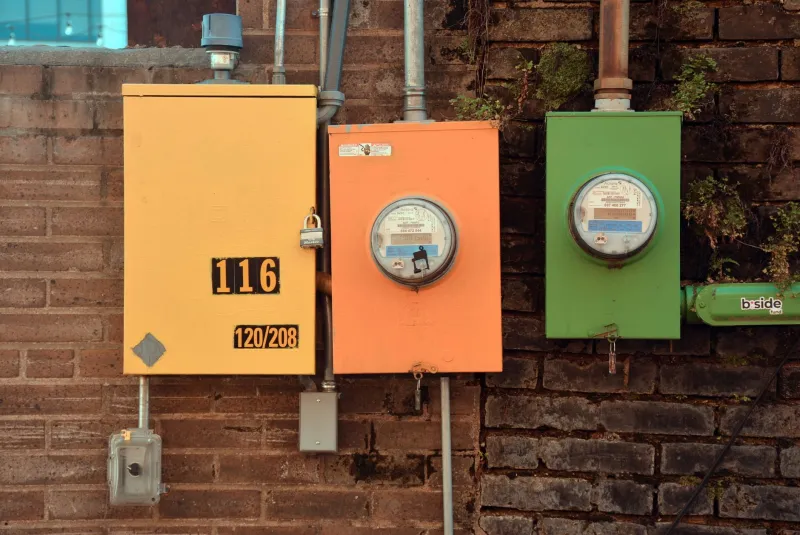
The first step in treating water as a strategic asset is disaggregation. A single master meter flattens everything into one number; submetering by end use — landscape, mechanical systems, domestic, kitchen or process — turns that number into a map. Facility managers are often surprised by what the map shows. In office parks across Arizona and California, irrigation routinely accounts for more than half of total consumption, dwarfing the indoor uses that dominate most sustainability conversations.
That kind of discovery reframes priorities. Xeriscaping with native and drought-adapted species, smart controllers tied to local weather data, and high-efficiency drip systems can reduce landscape demand by 40 to 60 percent in many climates. Meanwhile, cooling tower optimization — better cycles of concentration, conductivity-based controls, alternative water sources where regulations permit — addresses the largest indoor mechanical draw in most commercial buildings.
None of this requires a heroic capital campaign. Most of it begins with knowing where the gallons actually go.
The Credibility Test
There is a second reason to take water seriously, and it sits in the growing intersection of operations and reputation. ESG reporting frameworks increasingly ask companies to disclose water intensity, and stakeholders have grown adept at distinguishing quantified claims from vague commitments. "We care about water" is a slogan. "We reduced potable water use per square foot by 32 percent over three years, verified through submetering" is a credential.
The difference matters in drought-sensitive markets. Municipalities in the Colorado River basin are tightening allocations. Commercial tenants are asking landlords about water resilience before signing leases. Investors screening for climate risk now include water stress in their models. A business that has already measured, reduced, and documented its usage arrives at these conversations prepared. One that hasn't arrives scrambling.
Building the Ledger
A practical water stewardship program follows a familiar arc:
- Establish the baseline. Pull 24 months of utility data and normalize it for occupancy and weather.
- Disaggregate. Install submeters or conduct a professional water audit to attribute usage by end use.
- Fix the invisible. Leak detection and fixture retrofits typically pay back in under two years.
- Redesign the big draws. Landscaping and cooling systems offer the deepest, most durable savings.
- Report honestly. Track progress against the baseline and publish it, including the setbacks.
That final step deserves emphasis. Credibility in sustainability communication comes from specificity and candor, not from perfection. Companies that report their misses alongside their gains build more durable trust than those that curate a flawless record.
Designing for a Drier Century
Water stewardship, at its best, is not a facilities project but a design philosophy. It asks what a business would look like if it treated every resource as finite and every input as information. The tholos endured because its builders assumed scarcity and designed for it elegantly. The businesses that thrive through the coming decades of water stress will be the ones that make the same assumption early — and turn their utility bills into a ledger of deliberate, documented progress.
The data is already arriving every month. The only question is whether anyone is reading it.