Salvage as Strategy: Making Deconstruction a Procurement Advantage
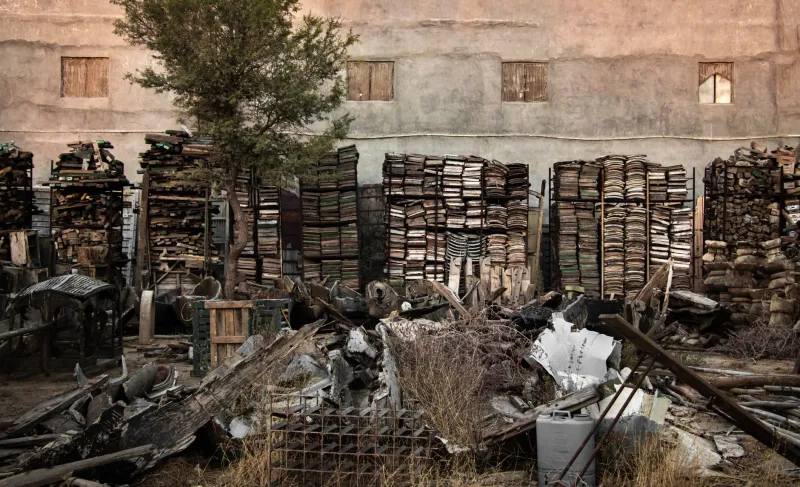
On a typical US commercial renovation, the dumpster arrives before the drawings are fully tested. Demolition crews move quickly, disposal costs are folded into the project budget, and the old building is treated as an obstacle rather than an asset. That sequence is convenient, but it is not inevitable. A growing number of owners and project teams are reversing the order: they inventory the building first, isolate valuable materials, and write reuse into the procurement plan before a wall comes down. The result is a supply-chain strategy disguised as a waste-management task.
From Waste Event to Material Audit
Deconstruction begins with information. Before abatement, demolition, or even final design, a material audit should identify what the building contains, what condition it is in, and which items have a plausible second market. Structural steel, dimensional lumber, brick, casework, doors, lighting fixtures, mechanical equipment, ceiling tiles, and architectural hardware can all be candidates, but not every material justifies the labor of removal. The audit should separate high-value salvage from low-value diversion and flag contaminants such as lead paint, asbestos, mold, or excessive finish damage.
This is where deconstruction differs from conventional demolition. Demolition optimizes for speed and disposal. Deconstruction optimizes for recoverable value, which means sequencing work around removal, sorting, storage, and documentation. On a commercial project, that may require a pre-renovation salvage period, dedicated staging space, and a contractor comfortable with careful disassembly rather than rapid clearing. The audit is not a feel-good exercise; it is a feasibility study for a temporary materials business.
The Economics of Salvage
Salvage value is not the same as replacement cost. A business should calculate net recoverable value: resale price minus removal labor, cleaning, testing, storage, transport, and the risk that an item does not sell. Architectural salvage yards, online marketplaces, reuse centers, and specialty dealers can provide price signals, but local demand matters. Reclaimed brick may command attention in one market and sit idle in another. High-end light fixtures and heavy timber can be attractive; standard ceiling grids and damaged drywall usually are not.
The financial case often rests on a combination of avoided disposal costs, resale revenue, and reduced purchasing for the new project. If the owner can reuse doors, fixtures, or structural elements in the renovated space, the avoided procurement cost may be more reliable than an uncertain resale market. Donation programs can add another pathway, though businesses should confirm documentation requirements and tax treatment with qualified advisers. The point is not to assume that every old building is a gold mine. The point is to measure before deciding.
Writing Reuse Into the Contract
Reused materials rarely appear in a project because someone remembered to ask for them. They appear because the procurement language makes them visible. Specifications can require a deconstruction audit, a salvage plan, and separate line items for removal and storage. They can define acceptable condition standards, require testing for structural or fire-performance properties, and establish chain-of-custody records for materials entering the new construction. They can also assign responsibility for warranties, which is often the quiet reason reused materials get value-engineered out.
Contractors respond to incentives. A project that shares disposal savings with the demolition contractor, or that sets a salvage target alongside a diversion target, is more likely to see materials recovered. Procurement teams should also ask suppliers whether reused content can be incorporated into finishes, furniture, or landscape elements without compromising performance. The goal is not to force reuse into every assembly. It is to create a fair evaluation process so that reuse can compete with new materials on cost, schedule, and risk.
Certification and Credible Storytelling
Green building certification programs reward documented diversion and material reuse, but the documentation is the product. A salvage ledger—listing material types, quantities, destinations, and end uses—supports certification submissions and gives the owner a defensible narrative. Without that record, claims about circularity remain anecdotal. With it, a business can explain exactly what was recovered, where it went, and how it reduced demand for new material.
That narrative has external value, but it must be handled carefully. Customers and investors are increasingly alert to vague environmental language. A renovation that reused 40 doors is not a circular economy by itself, but it is a measurable step that can be reported honestly. The strongest stories connect salvage to business decisions: avoided purchase costs, local supply relationships, reduced disposal logistics, and design choices that preserve the character of an existing asset.
The Tholos Lesson
The ancient tholos was a round structure, and its form suggests a useful discipline: materials circulate, rather than move in a straight line from quarry to landfill. Modern businesses do not need to romanticize the past to borrow that logic. They need a deconstruction audit, a realistic salvage model, procurement language that gives reused materials a fair hearing, and documentation that turns recovered material into a verifiable asset. The building is not merely an obstacle to the next project. Treated with care, it is a materials depot already standing on the site.