The Instrument in the Basement: Facilities Staff as a Sustainability Early-Warning System
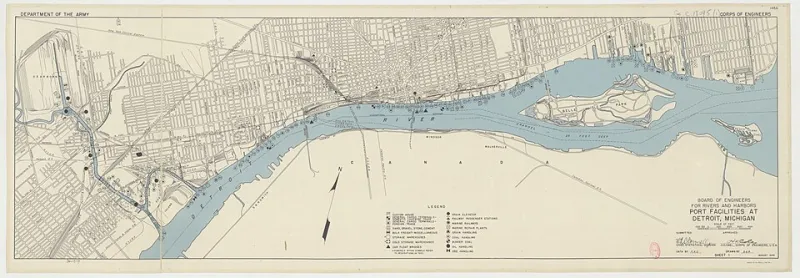
Photo: Etats-Unis. Army. Corps of engineers. Auteur du texte, Public domain, via Wikimedia Commons
Most sustainability programs are built around instruments that report late. The utility bill arrives after the month has closed. The energy dashboard shows a trend after the trend has settled. The certification review happens after the documentation is assembled. None of these tools is useless, but all of them are retrospective. The most sensitive instruments in a green building are not mounted in a panel. They are the custodians, engineers, and night-shift technicians who touch the building every day and notice when something changes.
That observation is rarely captured. A technician hears a pump short-cycling and assumes someone else has reported it. A custodian notices a draft in a corridor that was not there last winter and mentions it to no one. A night engineer smells a faint mustiness near a roof drain and makes a mental note that disappears by morning. By the time the utility bill confirms a problem, the building has been out of tune for weeks or months. For a sustainability program that claims to be managed, this is a governance gap.
The Data That Never Reaches the Dashboard
Buildings do not fail all at once. They drift. A sensor loses calibration. A damper sticks. A schedule gets overridden during a tenant event and never restored. A roof drain clogs slowly. A pump begins to cycle more often. A door seal wears. A lighting control zone is bypassed. These are not dramatic failures, and most of them are invisible to monthly reporting until they compound.
The people who notice them are not usually in the sustainability meeting. They are in the basement, on the roof, in the loading dock, and in the mechanical room at 2 a.m. They know which corridors are always cold, which restroom exhaust is louder than it should be, and which floor smells like wet concrete after a storm. That is operational intelligence. It is also a compliance asset, because building performance standards, green certification renewals, and internal environmental reporting all depend on systems performing as intended.
Why Programs Miss It
There are practical reasons. Facilities staff are busy, and sustainability staff are often stretched across portfolios. The green team may meet quarterly and include design, finance, and external consultants but no one who turns a wrench. There may be no shared language for reporting an observation that is not yet a work order. And there is a cultural risk: staff may fear that reporting a problem will be treated as an admission of fault rather than a contribution to performance.
Policy and compliance programs often reinforce the gap. They ask for documentation, metrics, and attestations. They rarely ask for qualitative field observations. Yet a compliance system that depends on measured performance needs an early-warning channel. Without one, the organization is managing by autopsy.
A Routine That Costs Almost Nothing
A useful routine has three parts. The first is a short monthly walk-and-talk. Once a month, a sustainability lead or building manager walks a single zone with one facilities staff member for thirty minutes. The walk is not an inspection. It is a conversation with three questions: What has changed here since last month? What is not working the way it should? What have you stopped reporting because no one acted? Rotate the zone and the staff member so the program builds coverage over the year.
The second part is a single shared log. The log should be simple enough to use from a phone or a clipboard: date, location, observation, suspected cause, photograph if appropriate, and follow-up owner. It should not require a long form or a formal report. The point is to capture the observation before it evaporates. The log should be reviewed weekly by the building manager and monthly by the green team.
The third part is a standing seat in the green team for facilities staff. Not a symbolic invitation, but a paid seat with time allocated and authority to escalate. The representative should see the same energy and water trends as the sustainability lead and should be asked to interpret them. When the dashboard shows an unexplained increase, the facilities representative is the first person asked what changed on the floor.
Closing the Loop Matters More Than the Log
A log that never produces action will die within a quarter. Staff will stop reporting if observations disappear into a spreadsheet. The organization needs a visible close-the-loop habit: every logged item gets a response, even if the response is that no action is needed and why. Recognition should be routine. A brief monthly note that names the observations that led to a fix is more powerful than a pledge campaign.
This is where policy and compliance meet culture. A green team charter can require the monthly walk, the shared log, and the standing seat. An environmental management system can treat the log as a preventive-action record. A building performance compliance plan can use it to document operational drift and corrective action. None of these mechanisms is burdensome. They simply make observation part of the system.
The Tholos Lesson
The ancient tholos was a place where gathering and structure were inseparable. The lesson for a modern sustainability program is not nostalgic. It is that durable buildings depend on the people who tend them, and that tending depends on being heard. A building with excellent meters and no feedback channel is not well instrumented. It is merely well measured.
In 2026, as US owners face tighter performance expectations and more scrutiny of environmental claims, the cheapest early-warning system may already be on payroll. Ask the people who notice first. Give them a log, a walk, and a seat at the table. The utility bill will confirm what they already knew.