What Your Meter Is Trying to Tell You: Reading the Energy Audit as a Strategy Document
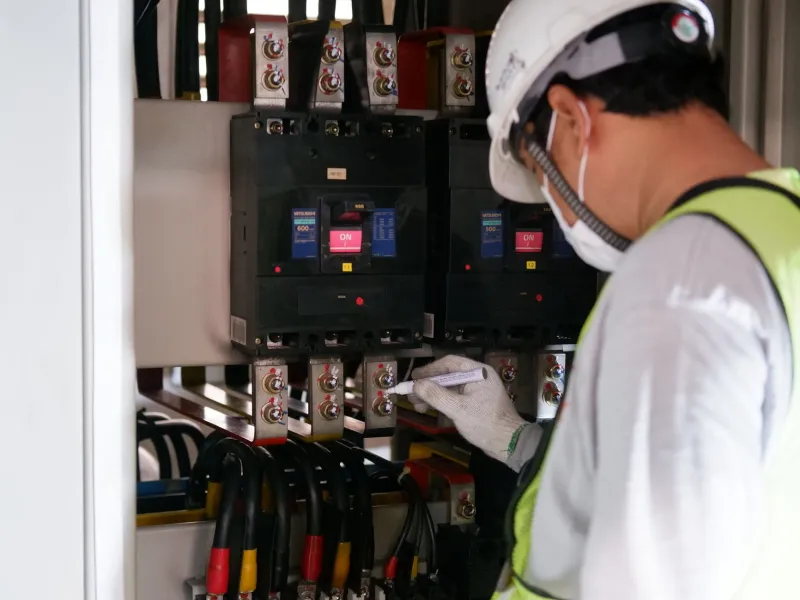
Somewhere in your filing cabinet — or more likely, in a folder marked 'Vendor Reports' on a shared drive — sits a document most business owners never read twice: the commercial energy audit. It arrived after a walkthrough by a engineer with a thermal camera and a clipboard. It contains charts, kilowatt-hours, and a recommendation or two you skimmed. Then business resumed.
At Tholos Green, we think this is a quiet waste. An energy audit, read correctly, is not a compliance chore. It is a strategic planning document — one tailored to your exact building, your exact equipment, and your exact utility tariff. No consultant invented a roadmap for you from scratch. Your meter has been drafting one for years.
The Audit Is a Mirror, Not a Report
The first shift in perspective is this: an audit doesn't tell your building what to do. It tells you what your building is already doing. Every line item — the rooftop unit short-cycling on a mild afternoon, the lighting left on in an unoccupied storage bay, the water heater holding temperature all weekend for a staff of four — is a behavioral record of the business itself.
That's why the audit deserves the same attention you'd give a profit-and-loss statement. Both describe where resources actually go, as opposed to where you assume they go. And in our experience, the gap between assumption and measurement in commercial buildings is routinely 20 to 30 percent. That gap has a dollar value, and it compounds annually.
Sorting the Findings: Payback Period as Your Compass
Most audits arrive with a laundry list of recommendations. The mistake is treating them as a menu. Instead, sort every finding by simple payback period — the cost of the measure divided by the annual savings it produces.
What usually emerges is a three-tier structure:
- Tier one: the quick wins. LED retrofits, occupancy sensors, programmable thermostat schedules, weatherstripping. Paybacks of one to three years, often shorter once utility rebates are applied.
- Tier two: the steady earners. HVAC upgrades, variable-speed drives on pumps and fans, better insulation. Paybacks of three to seven years.
- Tier three: the strategic moves. Solar arrays, full building management systems, envelope overhauls. Longer horizons, but these carry the largest certification and valuation upside.
The discipline lies in resisting the temptation to start with tier three because it's the most impressive. The tiers are sequential by design: tier one funds tier two, and tiers one and two together build the savings record — and the internal credibility — that makes tier three financeable.
Let the Quick Wins Pay for the Retrofits
Here is the arithmetic most owners miss. A lighting retrofit that saves $18,000 a year is not merely a line-item improvement. Over a five-year horizon, it generates $90,000 of avoided expense — capital you can earmark, explicitly, for the rooftop unit replacement or the controls upgrade sitting in tier two.
Some organizations formalize this into a rolling sustainability fund: every dollar of verified energy savings is reinvested in the next measure on the audit's list. Within a few years, a building is undergoing substantial decarbonization without a single new appropriation from the operating budget. The audit becomes a self-executing plan.
Audit Data as Certification Currency
The same numbers that fund your retrofits also open doors. ENERGY STAR certification requires twelve months of verified benchmarking data — which a properly conducted audit already produces. LEED for Existing Buildings: Operations and Maintenance draws heavily on measured performance, commissioning records, and energy modeling that align with audit findings.
Green financing works the same way. C-PACE programs, SBA-backed green loans, and an increasing number of commercial lenders offering preferential rates for energy-efficient properties all require documentation. A thorough audit, paired with post-retrofit measurement and verification, is essentially a pre-assembled application package. You are not gathering data when the lender asks; you already have it.
From Findings to Roadmap
The final step is administrative and unglamorous: turn the audit into a dated, owned plan. Assign each measure a year, a budget source, and a person responsible. Re-benchmark annually. Compare projected savings to actual savings, and let the variances refine your assumptions.
The ancient tholos was a structure of measured proportion — every stone placed in relation to a deliberate plan. A business pursuing sustainability deserves the same architecture. You do not need to invent your roadmap. You need to read the one already written, in kilowatt-hours, on your wall.