Before You Sign for Sunshine: A Due-Diligence Checklist for Green Power Contracts
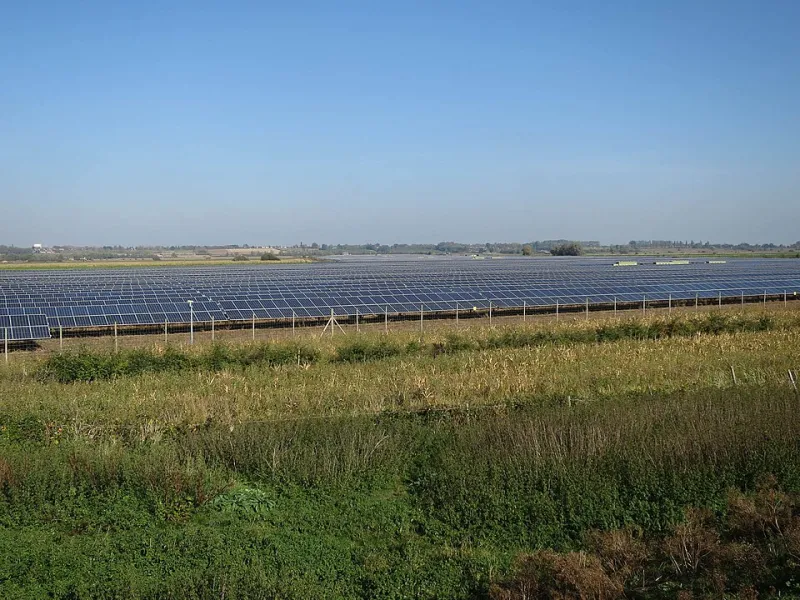
Photo: Hugh Venables , CC BY-SA 2.0, via Wikimedia Commons
A green power agreement is not a purchase. It is a bet — usually a fifteen-year bet, struck inside a market that reprices every quarter, and signed by people who will be working somewhere else when the settlement arrives. For commercial real estate owners and large tenants, the contract sits at the intersection of energy operations, finance, and the compliance story told to lenders, tenants, and regulators.
What follows is a working checklist. It is deliberately blunt, because the failure mode in this market is not ignorance. It is enthusiasm.
1. What Is This Contract Adding?
Additionality is the difference between paying for an existing electron and paying for a new one. A renewable energy credit purchased from a facility that was built a decade ago and would have operated regardless moves paperwork. A contract that supports project financing for a new array, or extends the operating life of one that would otherwise retire, changes the physical grid.
Ask the developer directly: what would not get built without this contract? Then ask for the evidence — the financing structure, the notice to proceed, the interconnection status. Physical PPAs with new projects are usually easy to defend on this point. Unbundled credit purchases rarely are, and that is fine, provided the company is honest internally about which one it bought.
2. How Long Am I Willing to Be Right About the Grid?
Term length is a structural decision disguised as a commercial one. Long contracts buy price certainty and project viability; they also lock in assumptions about load, occupancy, and building ownership that may not hold. Commercial owners should match the term against the realistic hold period and the tenant roster's lease profile. Tenants should check whether the contract assigns on a sublease or a sale, and at what cost.
Ask about index structures versus fixed pricing, about change-of-law provisions, and about what happens if the building is sold before the contract expires. The exit terms matter more than the headline price, because the exit is the part no one models in the excitement of signing.
3. Who Eats the Curtailment?
Renewable projects produce when the resource produces, not when the building needs it. In markets with deep renewable penetration, negative pricing events are routine, and a generator that is curtailed or settles at a negative price is a generator that is not delivering the economics in the term sheet.
Find out how volume risk is allocated. Is settlement at a trading hub or at the generator's node, and how large is the basis risk between them? Is there a firming or shaping product attached, and who pays for it? Does the contract specify curtailment compensation? A PPA whose financial model assumes perfect output is a PPA that will generate an unpleasant accounting conversation in year three.
4. Whose Credit Is Behind the Counterparty?
Many projects are owned by special purpose entities formed for the occasion. That is normal, and it is also a risk. Ask who the ultimate obligor is, whether there is a parent guarantee, whether collateral must be posted, and how the contract handles a downgrade of either party.
The mirror question is your own credit. Virtual agreements settle financially and are frequently treated as derivatives, which means hedging documentation, mark-to-market exposure, and a treasury team that needs to be in the room from the first meeting. If accounting treatment surprises your controller in the month before signing, the deal is not ready.
5. Where Do the Credits Go, and Who Can Prove It?
A renewable energy credit that is sold twice is worth nothing, and the audit trail is the only thing that makes the claim durable. Confirm the tracking system, the retirement process, the vintage, and the retirement beneficiary. Confirm that retirement happens in your name or the name of the entity making the claim, and that it happens promptly.
If the contract involves a broker or a portfolio of projects, ask how chain of custody is documented and whether the credits carry a recognized certification. Ask, too, whether any part of the output is already committed to a state renewable portfolio obligation, since a credit used to satisfy a compliance obligation cannot also be used for a voluntary claim.
6. Can I Actually Defend an Hourly Claim?
Annual matching remains the default for most corporate claims and for many certification pathways: produce or purchase as many credits over a year as you consumed over a year. Hourly matching — often marketed as carbon-free around the clock — is a stricter and considerably more expensive standard, and it usually requires storage, dispatchable resources, or a more sophisticated settlement structure.
Neither approach is dishonest. What is dishonest is claiming the stricter one while buying the looser one. Decide which claim the organization can substantiate, write it down, and make sure the marketing team is working from the same document as the procurement team.
7. Does This Help or Hurt My Compliance Story?
This is the question US building owners most often skip, and it is the one that ties the contract to the asset. Several state and local building performance standards now allow limited use of credits and renewable energy purchases toward compliance, and each defines eligibility differently — some require physical delivery, some accept unbundled credits, some cap the share. Certification programs treat purchased energy in their own ways, and benchmarking rules may diverge from corporate reporting conventions.
Before signing, map the contract onto three things: the building's performance standard obligations, the certification or rating the asset is pursuing, and the company's own emissions inventory. Where the three diverge, document the treatment rather than discovering it during a filing.
The Signature Is the Easy Part
The diligence is the work: hourly load modeling, a treasury review, a legal review of assignment and change-of-law provisions, and a clear-eyed conversation about what claim the organization is prepared to defend in public. A well-structured agreement behaves like good structural masonry — each element carrying a share of the load, so that no single assumption has to hold up the whole roof. A poorly structured one looks identical in the deck and behaves very differently in year four.